Call Now: 305-342-2535

Do Coffee Carts Make Money? A Realistic Look at Revenue and Profit
Yes, coffee carts can make money, especially when they focus on private events, corporate catering, conferences, and brand activations instead of relying exclusively on individual drink sales. Profit depends on pricing, booking volume, labor, transportation, equipment costs, and whether the owner properly accounts for their own time.
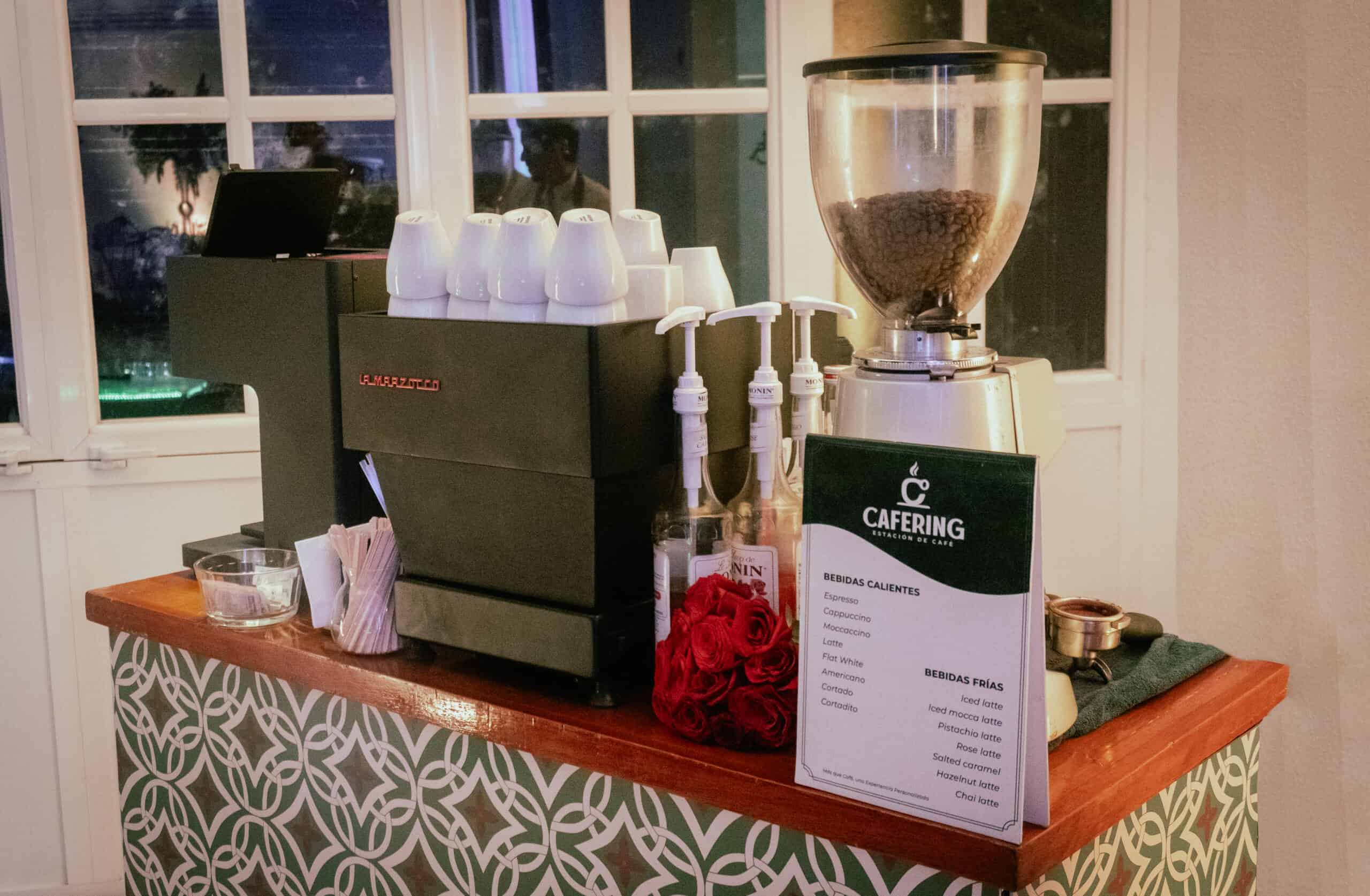
Do Coffee Carts Make Money?
Coffee carts can be profitable, but the business model matters more than the cost of making each drink.
A cart selling individual coffees depends on foot traffic, weather, operating hours, and daily transaction volume. An event coffee cart is booked in advance for an agreed price, giving the operator more predictable revenue before arriving.
For example, Cafering’s coffee cart catering packages start at $1,050 for two hours. Larger events may require additional service hours, baristas, coffee carts, custom branding, or specialty services. One conference or brand activation can therefore generate considerably more revenue than a small private booking.
That does not mean the entire booking price becomes profit. Every event also requires preparation, transportation, setup, service, breakdown, cleaning, administration, and equipment maintenance.
How Much Money Can a Coffee Cart Make?
There is no dependable national average for coffee cart revenue. Businesses using the term “coffee cart” include everything from one person selling drip coffee at a market to multi-city catering companies operating several carts simultaneously.
Solo and Small Event Operators
A new solo operator may initially accept lower-paying events to gain experience, build a portfolio, and collect reviews. Some even take early bookings near cost.
This can help establish the business, but constantly competing for the least expensive bookings makes sustainable profit difficult. The operator still needs to cover supplies, transportation, equipment wear, insurance, preparation, and their own labor.
Established Event-Catering Companies
An established coffee caterer can charge based on the complete service rather than the number of cups sold. Clients are paying for much more than coffee:
- Professional baristas
- Espresso equipment
- Transportation
- Setup and breakdown
- Guest service
- Reliable event execution
- Menu planning
- Insurance and venue coordination
This model can produce strong margins when the company prices correctly and operates efficiently.
A published example from Green Joe Coffee School documented a large event that generated $6,770 in sales from 1,354 drinks. After a 25% concession fee, seven workers, and $1,000 in product costs, the operator reported $3,015 in net profit. It was an unusually large event rather than a typical booking, but it demonstrates how volume, staffing, venue fees, and workflow can completely change the result.
Multi-Cart Conferences and Brand Activations
The highest revenue opportunities typically involve multiple carts, longer service periods, large conferences, multi-day programs, retail campaigns, and branded coffee cart activations. This is also where coffee catering for conferences tends to scale into a much larger booking than a single private event.

Established operators serving multiple cities can build seven-figure revenue businesses. However, revenue should never be confused with owner income. Scaling introduces additional expenses such as:
- More employees and managers
- Warehouses or storage facilities
- Additional vehicles
- Replacement equipment
- Sales and administrative staff
- Travel and accommodations
- Workers’ compensation and payroll expenses
- Additional insurance and operating systems
A solo operator may retain a larger percentage of each booking, while a larger company can generate much more total revenue with lower margins.
Coffee Cart Catering vs. Selling Individual Drinks
Coffee cart catering generally offers more predictable economics than selling drinks individually.
| Business model | How revenue is earned | Main advantage | Main risk |
|---|---|---|---|
| Street or market cart | Individual drink sales | Low barrier to testing demand | Revenue depends heavily on traffic and weather |
| Private event cart | Predetermined booking price | Revenue is known before the event | Limited by the number of available booking dates |
| Corporate coffee catering | Packages, service hours, and upgrades | Larger and potentially repeat bookings | Requires dependable service and professional operations |
| Conferences and activations | Multiple carts, multiple days, staffing, and branding | Highest potential booking values | Greater labor, logistics, and equipment requirements |
A busy public location can still work well, particularly when one person operates the cart and keeps overhead low. The risk is that even an excellent product cannot compensate for a weak location or inconsistent customer volume.
Catering removes much of that uncertainty. The operator knows the event date, service duration, estimated attendance, and booking value beforehand. Corporate clients may also book recurring employee events, conferences, retail activations, or multi-location programs.
What Determines Whether a Coffee Cart Is Profitable?
Pricing and Event Selection
A cart can stay busy and still make very little money if every booking is underpriced.
Pricing must cover more than ingredients and the hours spent serving guests. It also needs to account for preparation, communication, transportation, loading, setup, breakdown, cleaning, and administrative work.
The most profitable booking is not automatically the one with the highest total price. A straightforward two-hour event nearby may be more profitable than a larger event requiring extensive travel, custom equipment, several employees, and an overnight stay.
Labor and Owner Involvement
Single-operator carts can have strong margins because the owner performs most of the work. The problem is that owners often treat their own labor as free.
If a booking requires two hours of service but also takes six additional hours to prepare, transport, set up, clean, and manage, the owner worked eight hours. That time must be considered when evaluating whether the event was actually profitable.
As the business grows, the owner must either continue doing that work or pay someone else to do it.
Booking Volume and Seasonality
One profitable event does not necessarily make a profitable business. A coffee cart needs enough bookings to cover expenses that continue between events, including insurance, software, storage, marketing, repairs, and vehicle costs.
Seasonality also matters. Weddings, conferences, holiday events, and outdoor markets can have very different busy periods. A mixture of corporate events, private parties, conferences, and activations can make revenue more consistent.
Operating Efficiently Without Overbuilding
Buying every possible upgrade before demand exists can delay profitability.
Additional refrigerators, sinks, equipment, carts, printers, and menu items create more expenses, weight, transportation requirements, electrical demands, and potential repair problems. Equipment should solve a real operational need or support revenue that already exists.
A lean cart with dependable equipment and an efficient menu will often be more profitable than an elaborate setup filled with features customers are not paying for.
The Costs Coffee Cart Owners Commonly Forget
Coffee and milk are only a small part of the true cost of operating a mobile coffee business.
Commonly overlooked expenses include:
- The owner’s preparation and administrative time
- Barista wages, bonuses, and incentives
- Payroll expenses and contractor costs
- Fuel, tolls, and parking
- Vehicle depreciation
- Espresso machine maintenance
- Grinder repairs and replacement burrs
- Repainting or repairing the cart
- Replacing damaged tools and serving supplies
- Card processing and booking platform fees
- Insurance
- Storage or warehouse space
- Marketing and sales costs
- Unused or wasted ingredients
- Purchasing additional carts as the company grows

A basic event profit calculation should look like this:
Booking revenue
minus ingredients and disposable supplies
minus labor
minus transportation
minus payment fees
minus event-specific expenses
minus a portion of recurring overhead
minus fair compensation for the owner’s time
equals actual profit
Calculating profit based only on the cost of coffee, milk, and cups creates an unrealistic picture. This is why claims of 80% or 90% “profit per cup” can be misleading. They usually describe the difference between the selling price and ingredient cost, not the company’s final net profit.
Can You Recover Your Startup Investment Within the First Year?
Recovering a coffee cart investment within the first year can be realistic for a lean operation with consistent, properly priced bookings. It is not guaranteed.
The timeline depends on:
- The initial cost of the cart and equipment
- Whether equipment was purchased new or used
- Average booking value
- Number of monthly bookings
- Actual profit retained from each event
- Marketing expenses
- Repairs and unexpected costs
- Whether the owner withdraws the profit or reinvests it
Promises that most coffee carts recover their investment within three or six months should be treated cautiously. Two operators can purchase similar equipment and experience completely different results based on their market, pricing, sales ability, and type of events.
Total startup investment ÷ average actual profit per event = bookings needed to recover the investment
This provides a useful target based on the operator’s own numbers instead of a broad online estimate.
Is a Coffee Cart a Good Business to Start?
A coffee cart can be a good business for someone who understands that making coffee is only one part of the job.
The strongest opportunities tend to come from combining good coffee with reliable event service, efficient operations, professional communication, and consistent sales. Event catering can provide higher booking values and greater predictability than relying entirely on daily foot traffic.
The business can also grow gradually. An owner may begin with one cart, perform most events personally, and add baristas, equipment, storage, and additional carts only after bookings justify the expense.
Coffee carts can make real money, but profitability does not come automatically from inexpensive ingredients. It comes from choosing the right business model, charging enough for the full service, controlling overhead, and accurately counting every cost involved.
Planning a corporate event, conference, or brand activation in South Florida?
Get a Quote