Call Now: 305-342-2535

What Do You Need for a Coffee Cart? Complete Equipment Checklist
Quick answer: An espresso coffee cart needs a capable espresso machine, grinder, portafilters, tamper, milk pitchers, coffee beans, milk, cups, water, power, cold storage, wastewater collection, and cleaning supplies. Many built-in features are optional, but forgetting one small essential, such as a portafilter, can prevent you from serving entirely.
What Do You Need for a Coffee Cart?
For a professional espresso cart, the essential equipment includes:
- Coffee cart or stable work surface
- Espresso machine
- Espresso grinder
- Portafilters
- Tamper and tamping mat
- Coffee scale
- Dosing cup
- Knock box
- Milk-steaming pitchers
- Coffee beans
- Whole milk and alternative milk
- Fresh water
- Wastewater container
- Cooler and ice
- Hot and cold cups
- Lids, straws, stirrers, and napkins
- Syrups, sauces, sugars, and sweeteners
- Extension cords and appropriate power connections
- Towels, sanitizer, brushes, and trash bags
- Menu and service accessories
- POS system if customers are paying individually
The exact setup depends on your menu, expected volume, location, and local requirements. A drip-coffee cart needs commercial brewers and insulated dispensers instead of an espresso machine and grinder. A prepaid coffee cart catering event may not need a POS system, while a cart selling directly to the public usually will. (If you are still deciding what to even call your setup, our guide on what to call a coffee cart breaks down the different names and formats.)
Essential Espresso Equipment
Espresso machine and grinder
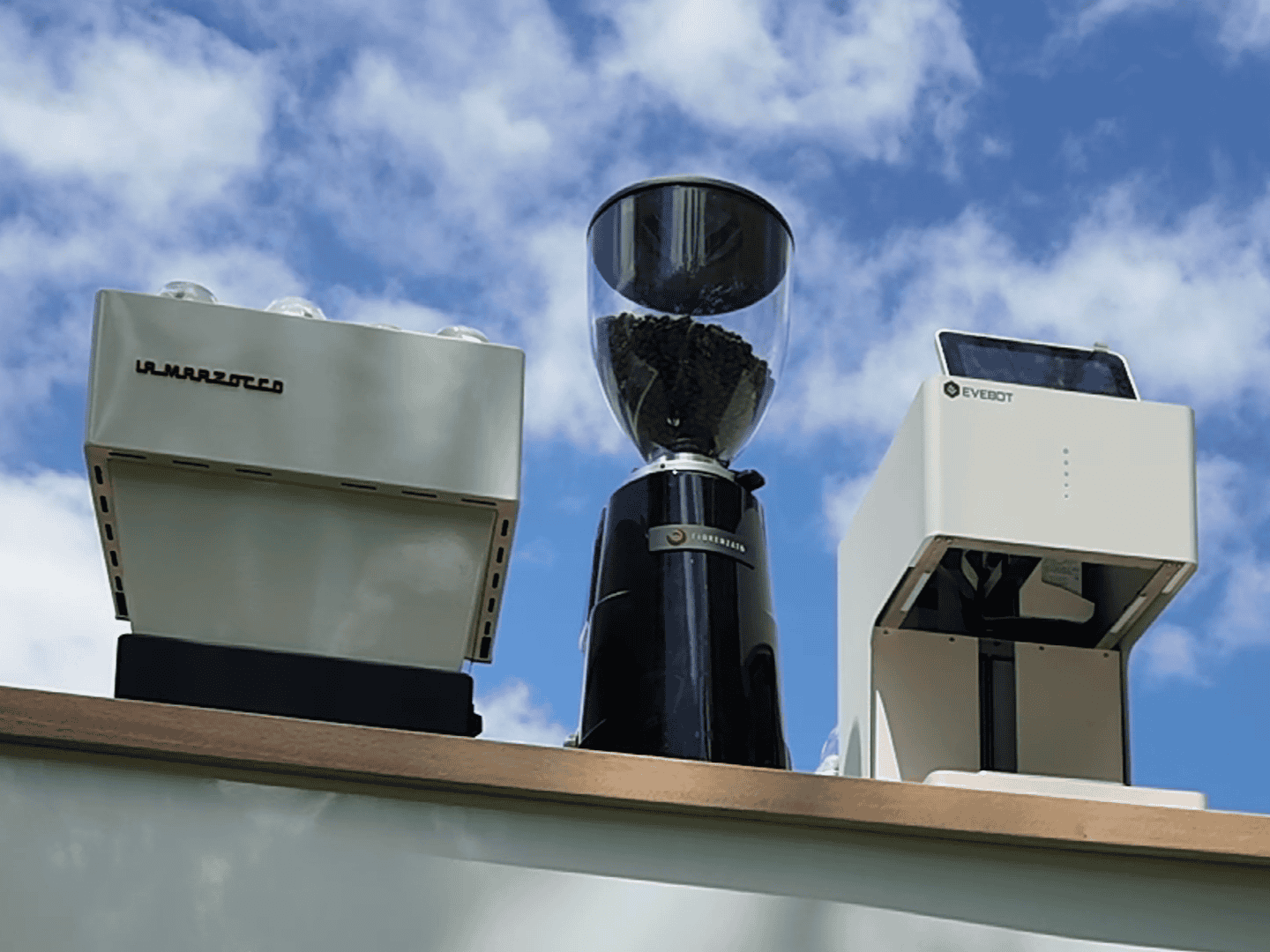
The espresso machine and grinder determine what the cart can serve and how quickly it can operate. They should be selected based on anticipated drink volume, available power, cart dimensions, and transportation requirements.
A home espresso machine may technically work for occasional low-volume service, but it can become the main bottleneck at a busy event. Professional carts generally need equipment capable of repeatedly brewing espresso and steaming milk without excessive recovery time.
The grinder must also keep pace with the machine. It should produce consistent grounds, allow fast adjustments, and fit securely on the cart.

Portafilters, tamper, scale, and dosing tools
Small espresso tools are easy to overlook because attention naturally goes to the machine and grinder. They are still essential.
At Cafering, which provides coffee cart catering in Miami, two portafilters are included on the most important portion of the event packing checklist. A forgotten portafilter is one of the smallest missing items that can make an espresso machine unusable.
The basic preparation tools include:
- At least one portafilter, preferably two
- Correct filter baskets
- Espresso tamper
- Tamping mat
- Coffee scale
- Dosing cup
- Timer, if not integrated into the scale or machine
- Group-head cleaning brush
Every tool must be compatible with the espresso machine. A spare basket or portafilter can also prevent a minor equipment problem from stopping service.
Milk pitchers and knock box
Bring multiple steaming pitchers so the barista can continue working while used pitchers are being rinsed or cleaned. Cafering commonly packs both large and small pitchers for different drinks and service volumes.
A knock box is also necessary for disposing of used espresso grounds. It does not need to be built into the cart. A portable knock box with a liner is simpler and works well for many mobile setups.

Water, Power, and Wastewater
Fresh water and wastewater containers
An espresso cart needs a dependable source of fresh water and somewhere to collect wastewater.
Depending on the equipment, water can come from:
- The venue’s plumbing
- A refillable water reservoir
- Sealed water containers connected to a pump
- The espresso machine’s internal reservoir
A self-contained system commonly uses separate containers for fresh water and wastewater. Containers need secure lids so they can be transported without leaking.
Water requirements should be calculated before the event. The espresso machine uses water for drinks, rinsing, and cleaning, so the amount required is greater than the finished beverage volume alone.
Pumps and plumbing
Some espresso machines can draw from an internal reservoir. Others require a pump and external water container. Quick-connect plumbing can make setup and breakdown easier, but it is not necessary for every machine.
A pitcher rinser is useful during higher-volume service, although it is not always essential. Pitchers can be rotated and cleaned through another approved method when volume and local requirements allow it.
Extension cords, power strips, and cable covers
Confirm the machine’s voltage, amperage, and wattage before choosing a power source. The espresso machine is usually the largest electrical load, but the grinder, water pump, printer, and other equipment must also be included.
For venue-based coffee catering, Cafering generally requires access to a standard 120V, 15A outlet within 25 feet of the setup. Other machines may require more power or a dedicated circuit.
A basic power kit may include:
- Properly rated extension cord
- Power strip when appropriate
- Cable covers or tape
- Backup extension cord
- Generator or battery system for locations without venue power
Do not assume every outlet can support the equipment. Confirm the available circuit before arriving.
Milk, Ice, and Cold Storage
Milk must remain at a safe temperature throughout transportation and service. This does not necessarily require a refrigerator built into the cart.
For many event coffee carts, a well-insulated cooler with sufficient ice is lighter, simpler, and easier to replace than permanent refrigeration. A refrigerator can add weight, consume power, occupy cart space, and introduce another component that can fail.
The cold-storage kit may include:
- Insulated cooler
- Whole milk
- Selected alternative milks
- Bagged ice
- Ice scoop
- Ice breaker or mallet
- Thermometer when required
- Gloves for handling ice
A built-in refrigerator or ice well may make sense for a permanent location or operation serving daily. It is not automatically necessary for an event cart.
Cups, Ingredients, and Service Supplies
The quantities should be based on expected attendance, service duration, menu, weather, and whether guests can order more than once. For a closer look at estimating exact amounts, see our guide on how much coffee you need for an event.
Beverage ingredients
- Coffee beans
- Whole milk
- Alternative milk
- Vanilla syrup
- Caramel syrup
- Chocolate sauce
- Any event-specific flavors
- Sugar
- Low-calorie sweeteners
- Drinking chocolate or matcha, if offered
Keep opened bottles organized and bring enough unopened backup product for the expected volume.
Disposable supplies
- Hot cups
- Cold cups
- Espresso or sample cups
- Correct lids for every cup size
- Straws
- Stirrers
- Napkins
- Spoons
- Cup sleeves, if needed
Cup and lid compatibility should be checked before packing. Having 100 lids does not help if they do not fit the cups being served.
Service and presentation
- Printed menu
- Menu stand
- Syrup pumps
- Sugar and napkin holders
- Aprons or uniforms
- Branded cups or cart panels, when applicable
- Coffee printer and extra ink, when applicable
Holders and display pieces can improve organization, but most are not operationally essential.

Cleaning, Sanitation, and Safety Supplies
Cleaning supplies are needed during service, not only afterward. Espresso preparation produces wet grounds, milk residue, spills, and wastewater continuously.
A practical cleaning kit includes:
- Microfiber towels
- Separate towel for placing beneath the machine
- Non-white cleaning towels
- Food-safe sanitizer
- Wet wipes
- Group-head brush
- Waste buckets
- Trash bags
- Knock-box liners
- Paper towels
- Gloves
- Tarp or protective covering for transportation
- Floor mat when required
- Cleaning detergent for the espresso machine
Use separate towels for the steam wand, work surface, spills, and general cleaning whenever possible.
Some jurisdictions or venues may require a dedicated handwashing station or other sanitation equipment. That does not always mean a sink must be permanently installed inside the cart. The correct solution depends on the operating location and applicable rules.
What Does the Physical Coffee Cart Actually Need?
The cart itself mainly needs to:
- Support the combined weight of the equipment
- Provide a stable preparation surface
- Fit through the doors, elevators, and access routes used at venues
- Roll safely over expected surfaces
- Hold frequently used tools within reach
- Protect or secure equipment during movement
- Leave enough working room for the barista
- Allow safe routing of electrical and plumbing connections
Drawers are especially useful for frequently handled tools such as the tamper, scale, dosing cup, sugars, and small cleaning supplies.
A professional coffee cart does not automatically need every possible feature built into it. Depending on the operation, the cart may work perfectly well without:
- Permanent sink
- Built-in refrigerator
- Built-in ice well
- Knock-box opening
- Built-in trash can
- Dedicated syrup compartments
- Napkin and sugar dispensers
- Permanent plumbing
- Onboard generator
Portable alternatives are often lighter, less expensive, and easier to repair. Permanent features make more sense when they solve a recurring operational or permitting need.
| Essential equipment | Depends on the operation | Optional upgrade |
|---|---|---|
| Espresso machine | Pump and plumbing | Built-in refrigerator |
| Grinder | Cooler vs. built-in refrigeration | Built-in ice well |
| Portafilters and tamper | Knock box style | Permanent sink |
| Milk pitchers | POS system | Coffee printer |
| Fresh water source | Handwashing station | Onboard generator |
| Power source | Ramp or dolly | Dedicated syrup compartments |
| Cups, lids, and disposables | Wastewater capacity | Custom cup dispensers |
| Cleaning and sanitation supplies | Weather protection | Pitcher rinser |
Equipment You Probably Do Not Need at First
New operators sometimes design the cart around every feature they might eventually use. That can make the cart heavier, more expensive, harder to transport, and more dependent on power.
Items that can often wait include:
- Built-in refrigeration
- Integrated ice bin
- Decorative ingredient organizers
- Large onboard sink systems
- Multiple grinders
- Coffee printer
- Permanent generator
- Oversized water system
- Custom cup dispensers
- Extensive syrup selection
This does not mean those upgrades are useless. It means they should solve a demonstrated problem.
For example, a refrigerator may be worthwhile for a permanent retail location. For occasional catering, a cooler can do the same job without adding another appliance to the cart. Likewise, a built-in pitcher rinser can improve speed, but it should not take priority over the espresso machine, grinder, water system, and essential preparation tools.
Additional Requirements for Selling Directly to the Public
A cart selling individual drinks usually needs several things that a prepaid event coffee bar may not.
POS system and internet connection
Retail equipment may include:
- Phone or tablet
- Card reader
- POS software
- Mobile internet connection
- Device chargers
- Cash box, if accepting cash
- Receipt printer, if needed
- Menu with individual prices
Test payment equipment and internet access before opening. A fully functioning coffee station cannot generate sales if customers cannot pay.
Permits and local health requirements
Licensing and equipment requirements depend on the state, county, municipality, venue, menu, and way the business operates.
Possible requirements include:
- Business registration
- Food-service license
- Mobile-vendor permit
- Commissary agreement
- Food-handler training
- Handwashing facilities
- Fresh and wastewater capacities
- Approved cold storage
- Fire inspection
- Liability insurance
- Permission from the property owner or event organizer
Check the requirements that apply to the exact location before building the cart. A setup accepted for private catering may not qualify for daily public vending.

Printable Coffee Cart Packing Checklist
Primary equipment
- Coffee cart
- Espresso machine
- Grinder
- Two portafilters
- Tamper
- Tamping mat
- Scale
- Dosing cup
- Knock box
- Large milk pitchers
- Small milk pitchers
Water and power
- Fresh-water containers with lids
- Wastewater container
- Water pump and plumbing, if needed
- Extension cord
- Power strip, if appropriate
- Cable covers or tape
Ingredients and cold storage
- Coffee beans
- Whole milk
- Alternative milk
- Cooler
- Ice
- Ice scoop
- Syrups and sauces
- Sugar and sweeteners
Cups and service supplies
- Hot cups
- Cold cups
- Espresso or sample cups
- Matching lids
- Straws
- Stirrers
- Napkins
- Spoons
- Menu
- Menu stand
- Apron or uniform
Cleaning and waste
- Microfiber towels
- Steam-wand towel
- Machine mat
- Cleaning brush
- Wet wipes
- Sanitizer
- Waste buckets
- Trash bags
- Knock-box liners
- Gloves
- Protective tarp
Transportation and optional equipment
- Ramp
- Dolly
- Floor mat
- Drinking water for staff
- POS equipment
- Coffee printer
- Extra printer ink
- Backup tools and supplies
Use the checklist for both packing and unloading after the event. Large equipment such as the espresso machine, grinder, beans, milk, and cooler can be forgotten just as easily as small tools when multiple people are loading.
How Much Does All This Equipment Cost?
The total depends heavily on the espresso machine, grinder, cart, plumbing system, and whether equipment is purchased new or used. A minimal setup using existing equipment or a simple folding cart can cost much less than a fully customized mobile coffee bar. For a general sense of package pricing, see our coffee cart catering pricing page.
The equipment list should be created before calculating the startup budget. This prevents optional built-in features from being treated as essential expenses and reveals the smaller supplies that are easy to leave out of an initial estimate. Once the equipment is in place, the next question most new operators ask is whether coffee carts make money.
Do I need a refrigerator on a coffee cart?
Not automatically. For most event coffee carts, a well-insulated cooler with enough ice keeps milk at a safe temperature without the extra weight, power draw, and space that a built-in refrigerator requires. A refrigerator makes more sense for a permanent location or an operation serving daily.
How many portafilters does a coffee cart need?
At least one, but two is standard. A second portafilter lets the barista keep pulling shots while one basket is being cleaned, and it protects service if one is dropped, damaged, or misplaced during an event.
Do I need a POS system for a coffee cart?
Only if customers are paying individually. A prepaid event coffee bar, where the host covers the cost, does not need one. A cart selling directly to the public typically needs a card reader, POS software, and a reliable internet connection.
What permits do I need to run a coffee cart?
It depends on the state, county, municipality, and how the cart operates. Common requirements include business registration, a food-service or mobile-vendor permit, food-handler training, and approved cold storage. Requirements should be confirmed for the exact location before the cart is built.
Planning an event and want the equipment, staffing, and setup handled for you?
Get a Quote