Call Now: 305-342-2535

How Much Coffee Do You Need for an Event? Calculator and Guide
Quick answer
For 50 guests, plan for roughly 50 to 100 drinks in the morning, 38 to 75 in the afternoon, or 25 to 50 in the evening. The right amount also depends on event length, guest count, whether coffee is the main beverage, and whether guests order steadily or all at once.
Event Coffee Calculator
Use the calculator to estimate coffee service for your event.
Adjust assumptions
75% regular
50 to 100 drinksEstimated total for this event
Total Coffee Needed vs. How Fast It Must Be Served
How many drinks the event needs in total, compared with how many must be produced during the busiest stretch.
Enter the number of guests, event type, time of day, hours of coffee service, and whether you want self-serve drip coffee or a staffed coffee bar. Coffee’s role at the event and how guests will order refine the estimate further.
For self-serve drip coffee, the calculator estimates total 8-ounce servings, gallons of brewed coffee, pounds of ground coffee, regular and decaf quantities, cups needed, and the number of 96-ounce carriers, airpots, or urn batches required.
For a staffed coffee bar, it estimates total drinks, demand during the busiest hour, the number of staffed coffee bars needed, baristas required, and approximate espresso beans and cups needed.
The result is a planning estimate, not a guarantee. Actual consumption varies by audience, menu, weather, schedule, and the other beverages available.
How Much Coffee for 50 Guests?
For 50 guests, you may need anywhere from 25 to 100 drinks. Time of day provides a useful starting point.
| Event time | Estimated drinks | Drip coffee | Ground coffee |
|---|---|---|---|
| Morning | 50 to 100 | 3.3 to 6.7 gallons | 1.5 to 3.1 pounds |
| Afternoon | 38 to 75 | 2.5 to 5 gallons | 1.2 to 2.3 pounds |
| Evening | 25 to 50 | 1.7 to 3.3 gallons | 0.8 to 1.5 pounds |
These ranges assume 8-ounce servings. The calculator narrows the estimate using event length, beverage importance, guest count, and ordering pattern.
Choose the higher end when coffee is the main non-alcoholic beverage, service is unlimited, or the event has few other beverage options. Choose the lower end when coffee accompanies a full bar and several alternatives.
Self-Serve Drip Coffee for 50 Guests
For a typical two-hour event with 50 guests, approximately 3 to 5 gallons will cover many situations.
A high-demand morning event may require closer to 6 or 7 gallons. An evening event with alcohol and several other beverages may require only 2 or 3 gallons.
Do not rely only on an urn’s advertised cup count. Manufacturers frequently measure an urn “cup” as 5 or 6 ounces rather than a full 8-ounce event serving.
A Staffed Coffee Bar for 50 Guests
For events large enough to need dedicated staff, working with a professional coffee cart catering company removes most of the guesswork around timing and volume.
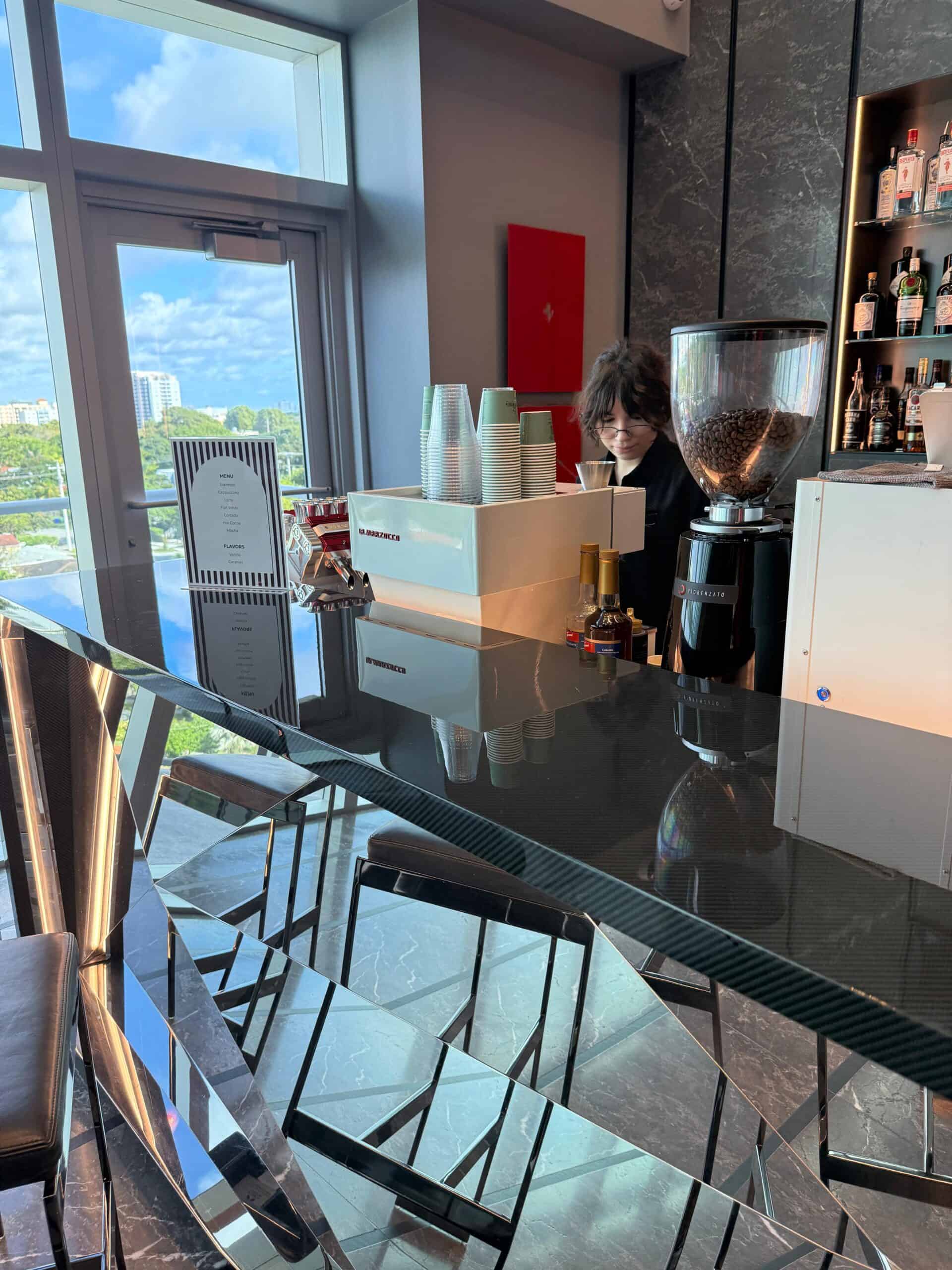
One staffed coffee bar is normally sufficient for 50 guests. The number of baristas depends on how quickly orders arrive.
One experienced barista can prepare approximately 55 drinks per hour. Two baristas sharing one coffee bar can typically produce 75 to 100 drinks per hour.
One barista may be sufficient when 50 guests order gradually over two or three hours. Two baristas are more appropriate when coffee is a main attraction or most guests will order within a short break.
Quick Coffee Estimates by Guest Count
These ranges estimate total drinks before the calculator applies adjustments for event duration and beverage importance.
| Guests | Morning | Afternoon | Evening |
|---|---|---|---|
| 10 | 10 to 20 | 8 to 15 | 5 to 10 |
| 25 | 25 to 50 | 19 to 38 | 13 to 25 |
| 50 | 50 to 100 | 38 to 75 | 25 to 50 |
| 75 | 75 to 150 | 57 to 113 | 38 to 75 |
| 100 | 100 to 200 | 75 to 150 | 50 to 100 |
| 150 | 150 to 300 | 113 to 225 | 75 to 150 |
| 200 | 200 to 400 | 150 to 300 | 100 to 200 |
| 300 | 300 to 600 | 225 to 450 | 150 to 300 |
| 500 | 500 to 1,000 | 375 to 750 | 250 to 500 |
The upper limits are not intended to represent normal consumption at every event. They account for longer service, repeat orders, and events where coffee plays a central role.
How the Coffee Estimate Works
The calculator begins with these consumption ranges:
- Morning: 1 to 2 drinks per guest
- Afternoon: 0.75 to 1.5 drinks per guest
- Evening or night: 0.5 to 1 drink per guest
It then adjusts the estimate using the following factors.
Guest Count
Smaller groups frequently have greater participation. Guests can approach the coffee bar together, service feels more personal, and reorders are easier.
At large events, not every attendee reaches the coffee service. Guests may be spread across different rooms, activities, schedules, and beverage stations.
The calculator accounts for this:
- 1 to 25 guests: increase the central estimate by 15%
- 26 to 50 guests: increase it by 10%
- 51 to 150 guests: no guest-count adjustment
- 151 to 300 guests: decrease it by 10%
- More than 300 guests: decrease it by 15%
These adjustments affect expected total consumption. They do not reduce the capacity required during a concentrated conference break.
Hours of Service
Barista service is normally offered for a defined number of hours. Guests order when they want a drink, so adding another hour does not double consumption.
The calculator uses a two-hour event as its starting point:
- 1 hour: multiply the estimate by 0.8
- 2 hours: no adjustment
- 3 hours: increase by 15%
- 4 hours: increase by 25%
- 5 or more hours: increase by 35%
Longer service creates more opportunities for reorders, but demand usually slows after the first rush.
Coffee’s Role at the Event
The calculator asks how important coffee will be at the event, with three options: main non-alcoholic beverage, one of several beverage options, or full bar and many other options available.
When coffee is the main non-alcoholic beverage, the calculator increases expected consumption by 25%.
This setting is important for alcohol-free weddings, morning celebrations, religious gatherings, recovery-focused events, and events where coffee is the primary adult beverage.
When a full bar and several alternatives are available, the calculator decreases expected consumption by 15%.
Ordering Pattern
Total attendance does not reveal how quickly drinks must be prepared.
The calculator asks how guests will order: gradually throughout service, mostly within one hour, or mostly within 30 minutes.
This question determines staffed coffee bar capacity. It does not materially change how many drip-coffee servings should be prepared.
Total Demand Versus Service Capacity
Total demand answers: how many drinks will guests consume?
Service capacity answers: how quickly must those drinks be prepared?
Consider two events that each expect 100 drinks.
At the first event, orders arrive gradually over three hours. One staffed coffee bar may have enough time to serve everyone.
At the second event, attendees have one 30-minute break between conference sessions. Producing the same 100 drinks within that window may require multiple bars.
For conferences, employee breaks, ceremonies, and presentations, calculate around the busiest ordering period rather than the event’s entire duration.
How Much Drip Coffee Do You Need?
For event planning, one gallon of drip coffee should be treated as approximately 15 eight-ounce servings.
A gallon technically contains sixteen 8-ounce portions. Using fifteen allows for overpouring, spills, and coffee left inside the serving container.
Drip-Coffee Formulas
- Gallons needed = total 8-ounce servings divided by 15
- Ground coffee = gallons multiplied by approximately 0.46 pounds
- 96-ounce containers = total servings divided by 12, rounded up
- Cups needed = calculated servings plus a 10% buffer
The ground-coffee estimate uses approximately 55 grams of coffee per liter of brewing water, based on the Specialty Coffee Association’s recommended brewing ratio.
Regular Versus Decaf
A reasonable daytime starting point is 75% regular coffee and 25% decaf.
Late-evening events may require a larger decaf share. The calculator lets you adjust this split under “Adjust assumptions.”
For 5 gallons of coffee, the default recommendation would be approximately 3.75 gallons regular and 1.25 gallons decaf.
Coffee Urns, Airpots, and Carriers
Always check the actual liquid capacity of the equipment. Useful event-planning conversions include:
- 1 gallon: approximately 15 servings
- 96-ounce carrier: 12 exact 8-ounce servings
- 96-ounce carrier with a service allowance: approximately 11 servings
- 2.5-liter airpot: approximately 10 servings
- 1 pound of ground coffee: approximately 33 servings at the recommended brewing ratio
A 50-cup urn may not provide fifty 8-ounce servings because commercial urns frequently use a smaller cup measurement.
How Many Drinks Can a Staffed Coffee Bar Serve?
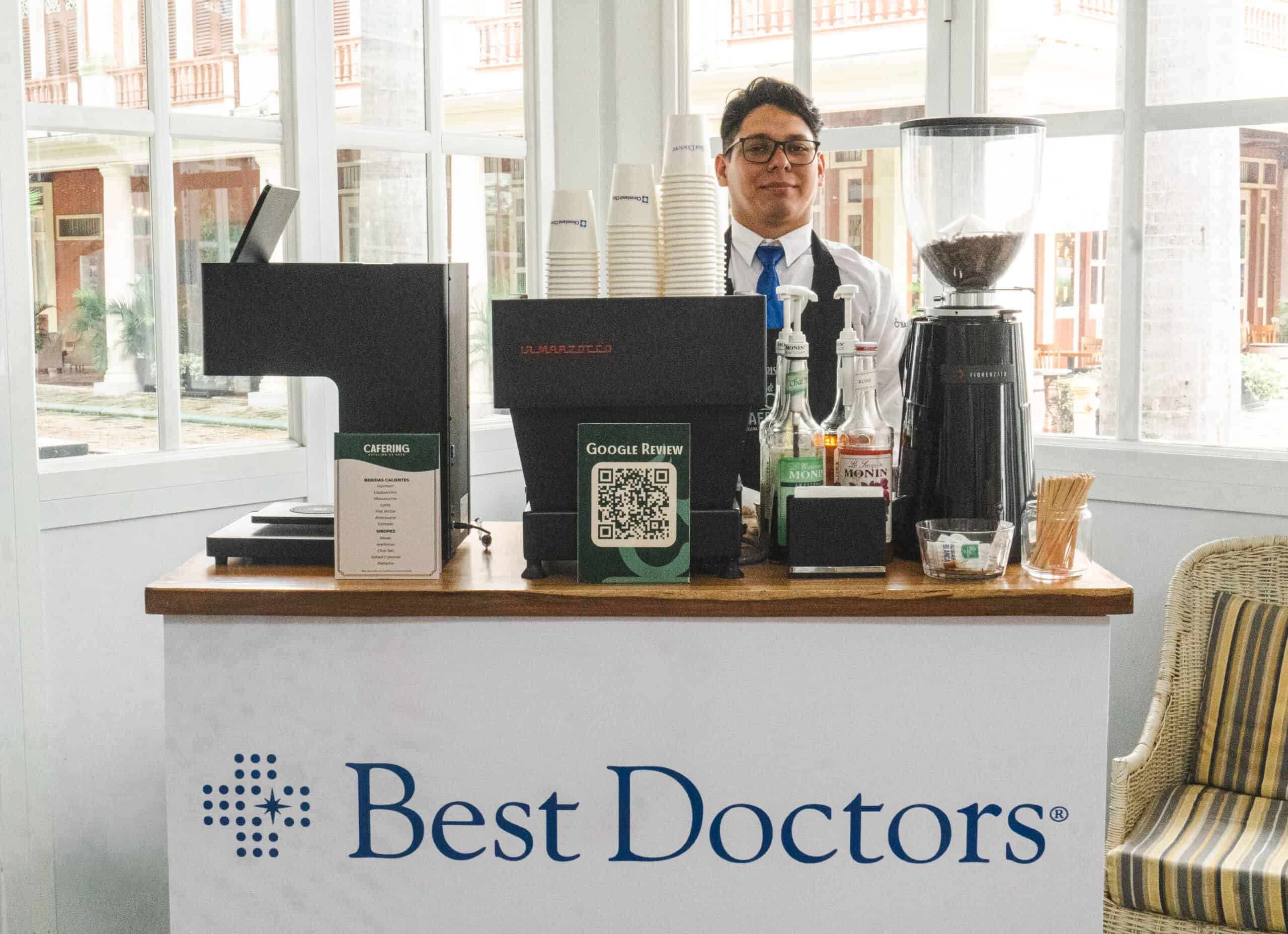
A staffed coffee bar prepares drinks individually. Its capacity depends on barista experience, equipment, workspace, menu complexity, and the number of milk-based drinks ordered.
Based on Cafering’s event experience:
| Setup | Estimated capacity |
|---|---|
| One coffee bar with one barista | Approximately 55 drinks per hour |
| One coffee bar with two baristas | Approximately 75 to 100 drinks per hour |
| Safe two-barista planning number | 85 drinks per hour |
These numbers are planning ranges, not universal guarantees for every coffee cart or catering company.
When One Barista Is Enough
One barista is generally appropriate when expected peak demand is 55 drinks per hour or less. This could include approximately 50 guests ordering steadily over two hours, a small private event, a meeting without a scheduled coffee break, or an event where coffee is one of several options.
When Two Baristas Are Better
Two baristas are recommended when peak demand is approximately 56 to 100 drinks per hour.
The second barista can take orders, prepare cups, steam milk, add syrups, manage iced drinks, hand off completed orders, and restock the workspace.
Two baristas do not double production because they share the same espresso machine, grinder, power supply, and working area.
The calculator uses 85 drinks per hour as its safe planning figure while showing that a simple menu and efficient workflow may reach 100.
When Another Coffee Bar Is Needed
Once expected peak demand exceeds what one two-barista bar can reasonably produce, another complete bar provides independent equipment and workspace.
- Up to 55 peak drinks per hour: one bar and one barista
- 56 to 85 peak drinks per hour: one bar and two baristas
- 86 to 100 peak drinks per hour: one bar and two baristas, with a high-capacity warning
- More than 100 peak drinks per hour: calculate additional bars and baristas
For larger events, divide projected peak demand across bars. Assign one barista per bar when each bar needs to produce 55 drinks per hour or less. Assign two when each bar must exceed that level.
Menu Complexity Changes Production Speed
A concise menu of espresso, Americanos, cappuccinos, and lattes moves faster than a menu with many syrups, toppings, and complicated customizations.
Production may slow when most guests order milk-based drinks, the menu includes many specialty recipes, hot and iced workflows operate simultaneously, guests customize several parts of each order, names and orders must be recorded, a coffee printer is used, the workspace is unusually limited, or electrical limitations affect equipment recovery.
The calculator’s recommendation assumes an organized professional setup and a reasonably focused menu.
How Event Timing Changes Consumption
Morning Events
Morning events generally create the strongest coffee participation. Use a starting range of 1 to 2 drinks per guest. The calculator favors the middle of that range and moves higher only when the event is small, coffee is a primary beverage, or service lasts several hours.
Afternoon Events
Use a starting range of 0.75 to 1.5 drinks per guest.
An afternoon conference may have moderate total consumption but intense demand during a scheduled break. This is why total drinks and hourly capacity must be calculated separately.
Evening and Night Events
Use a starting range of 0.5 to 1 drink per guest.
Demand may fall when alcohol and several beverages are available. It may rise when coffee accompanies dessert, becomes the primary non-alcoholic option, or is introduced as a featured experience.
How Event Type Changes the Estimate
Conferences and Corporate Meetings

Morning conferences often produce strong coffee demand. Scheduled breaks can also send hundreds of attendees toward the bars simultaneously.
For coffee service at conferences, select the concentrated-rush option if attendees have only 30 or 60 minutes between sessions.
Weddings and Private Parties
A wedding with a full bar may fall near the lower evening estimate. An alcohol-free wedding where coffee is the main adult beverage may fall near or above the upper end.
The timing also matters. Coffee introduced with dessert may generate a short rush even if total consumption remains moderate.
Brand Activations

Coffee consumption may be higher when complimentary drinks attract visitors or encourage participation.
Select “main non-alcoholic beverage” when the coffee bar is central to a brand activation. Public activations should also carry additional supplies because attendance and repeat orders are less predictable.
Open Houses and Networking Events
Guests usually arrive and leave at different times, creating steadier ordering. A longer service window can allow one bar to serve more people than the same bar could handle during a short conference break.
Other Factors That Affect Coffee Consumption
Weather. Hot weather does not necessarily reduce coffee demand when iced lattes and iced Americanos are available. It may primarily shift orders from hot drinks to iced drinks. Hot weather can reduce demand more noticeably when only drip coffee is offered.
Complimentary service. Complimentary, unlimited service typically creates more participation and repeat orders than a cash bar.
Visibility. A centrally placed, visually prominent coffee bar generally receives more orders than coffee positioned away from the main event space.
Guest preferences. The organizer’s knowledge of the audience should override a generic estimate. If the group is known for drinking coffee heavily, select the higher-demand setting.
Event schedule. Common demand peaks include guest arrival, morning registration, scheduled conference breaks, the end of a presentation, dessert service, employee shift changes, and the opening of a public activation.
Common Event Coffee Calculations
How Many People Does One Gallon of Coffee Serve?
One gallon contains sixteen exact 8-ounce portions. For event planning, count on approximately 15 servings.
How Many People Does 96 Ounces of Coffee Serve?
A 96-ounce carrier contains twelve exact 8-ounce servings. Using eleven servings provides a small service allowance.
How Many Pounds of Coffee Do You Need?
At approximately 55 grams per liter of brewing water: 1 pound produces approximately 33 servings, 1.5 pounds produces approximately 50 servings, 2.3 pounds produces approximately 75 servings, and 3.1 pounds produces approximately 100 servings.
How Much Coffee Is Used for Barista-Made Drinks?
A common double-shot espresso recipe uses approximately 18 grams of ground coffee. At that dose, 25 espresso-based drinks use approximately 1 pound, 50 drinks use approximately 2 pounds, 75 drinks use approximately 3 pounds, and 100 drinks use approximately 4 pounds.
Carry an additional 10% to 15% for grinder adjustments, wasted shots, spills, and unexpected demand.
Not every bar drink necessarily uses espresso. Tea, matcha, hot chocolate, and other alternatives reduce the amount of espresso beans consumed.
How Much Extra Coffee Should You Prepare?
For self-serve drip coffee, add approximately 10% when running out would disrupt the event.
For a staffed coffee bar, carry 10% to 15% extra beans, milk, cups, ice, and other consumables.
Extra ingredients do not create extra service capacity. If demand exceeds what the baristas and equipment can produce during the busiest period, add another bar or more staff.
Keep reading
Planning coffee for an event in South Florida and want it handled for you?
Get a Coffee Catering Quote